9+ curated guides • Updated November 2025
We've all heard the late-night talk show anecdotes of celebrities living in haunted mansions. But what happens when a ghostly encounter does more than just go bump in the night—what if it follows them into the recording studio or onto the film set? This is the story of the paranormal as the ultimate muse, revealing how chilling personal experiences shaped some of the most famous creative works we know and love. Forget simple campfire tales; we are peeling back the veil to examine how brushes with the other side become embedded in the very DNA of art. This is not about belief, but about influence—the spectral watermark left on a masterpiece, visible only to those who know how to look.
When you picture a cruise ship, you might think of grand, gilded halls and sprawling pool decks. But what if a ship was conceived less like a vessel and more like a work of contemporary art by the world's leading designers? Celebrity's Edge Class isn't just for sailing; it's a meticulously crafted architectural statement designed to change how you experience the ocean itself. For years, naval architecture has been an exercise in introversion—building floating resorts that distract you from the sea. The Edge Class, conceived by a supergroup of designers including Tom Wright, Kelly Hoppen, Patricia Urquiola, and the firm Jouin Manku, shatters this paradigm. They've inverted the very concept of a cruise ship, transforming it from an insulated container into a porous, outward-facing platform. This is not merely a collection of impressive rooms; it is a holistic design philosophy where every line, texture, and volume serves a single purpose: to dissolve the boundary between you and the horizon.
Remember the micro-bags and fluffy textures that defined 2022? Some of those trends vanished as quickly as they appeared, while others have proven their staying power. This isn't just a nostalgic look back; it's a post-mortem analysis designed to sharpen your eye, using the hits and misses of 2022 to predict which of today's 'it' bags are actually worth the investment. As a historian of style, I view trend cycles not as mysterious whims, but as predictable ecosystems with their own rules of survival. By dissecting the anatomy of 2022's most talked-about accessories, we can extract a timeless blueprint for identifying true sartorial assets versus mere fleeting distractions.
Forget the Dow Jones or the NASDAQ. To truly understand the pressures on the South Korean economy and the real-world impact of climate change, you need to look at the price of Napa cabbage. This is the story of the 'kimchi index,' the humble economic indicator that holds a nation's anxieties in a single, fermented jar. In Seoul, the cost of making kimchi isn't just a dinner table calculation; it's a street-level reading of the nation's economic pulse, a more tangible measure of inflation than any government report. This index doesn't track stocks or bonds; it tracks the volatile price of cabbage, garlic, and chili—the essential components of a dish that sits on nearly every Korean table, every single day.
You see the stark 'X' on the funnel from miles away, a symbol of the voyage ahead. But it's not just a letter; it’s the variable in a carefully crafted equation for your experience. We investigated how this 'X' factor manifests in everything from the architectural lines to the service, revealing the hidden philosophy that separates a good trip from an unforgettable one. Historically, the 'X' is the Greek letter 'chi,' for 'Chandris,' the line's founding family. But to treat it as a mere historical footnote is to miss the point entirely. Onboard a modern Celebrity vessel, that 'X' has been elevated from a legacy mark to a living design brief—a guiding principle for an experience that masterfully balances sophistication with ease.
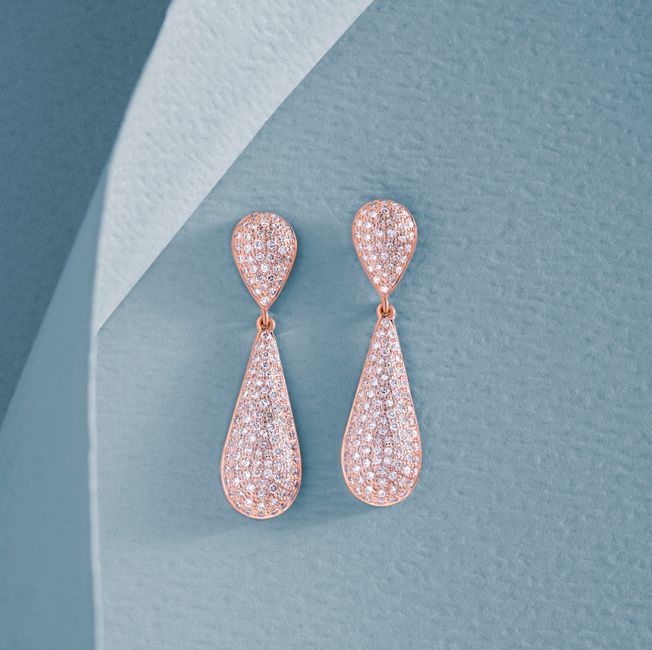
You know your budget and you've set your sights on 4-gram gold earrings. But what if 4 grams in one design could look twice as impressive as 4 grams in another? We're pulling back the curtain on the design tricks—from high-polish surfaces to hollow-form techniques—that create a powerful visual illusion, ensuring you get the most style and substance for your investment. Before I hung up my torch and polishing rags, I spent years manipulating metal, and let me tell you, weight is only half the story. The real magic is in the design, and I'm here to show you how to spot it. It's time to shop smarter, not heavier.
We’ve all seen them: the sad, twisted skeletons of cheap umbrellas littering the sidewalk after a single storm. We treat them as disposable, but the true cost of that $5 emergency purchase is a cycle of waste and frustration. What if your umbrella wasn't an afterthought, but a permanent, stylish fixture of your wardrobe—an investment in craftsmanship you could be proud to carry for years to come? This isn't just about staying dry; it's a profound statement against the throwaway culture that defines fast fashion. It's about choosing an object of both beauty and resilience, transforming a mundane necessity into a pillar of your personal style and a testament to your commitment to conscious consumption. By embracing the umbrella as a permanent accessory, we reclaim it from the landfill and place it firmly in the realm of cherished, long-lasting possessions.
We see aquamarine and think of tranquil seas or the March birthstone. But what if its true value lies in its ancient lore as the 'sailor's stone'—a charm for clarity and courage? In an age of endless notifications and digital storms, this gemstone's history offers a powerful, tangible reminder to navigate our own chaotic waters with a calm mind. This isn't about superstition; it's about symbolism. In our world, the treacherous seas are metaphorical. They are the endless streams of information, the high tides of social media comparison, and the disorienting fogs of misinformation. We are all sailors now, navigating a digital ocean that threatens to overwhelm our senses. This article explores how a simple piece of aquamarine jewelry can serve as our modern-day talisman—an anchor of intention in a sea of distraction.
Most identity symbols are meant to be seen—a loud and proud declaration to the world. But a simple black ring, worn on a specific finger, operates on a different frequency; it’s a quiet whisper, a secret handshake in plain sight. This is the story of how a piece of jewelry became a masterful tool for coded communication, allowing a community to find each other without saying a word. In a culture saturated with overt signals about attraction and relationships, the ace ring is a masterclass in subtle resistance and connection. It’s a symbol that doesn’t shout but rather listens, waiting for a knowing echo in the static of everyday life. This article explores the sociological mechanics of this powerful, silent statement and its profound importance for a community often defined by what it is not.